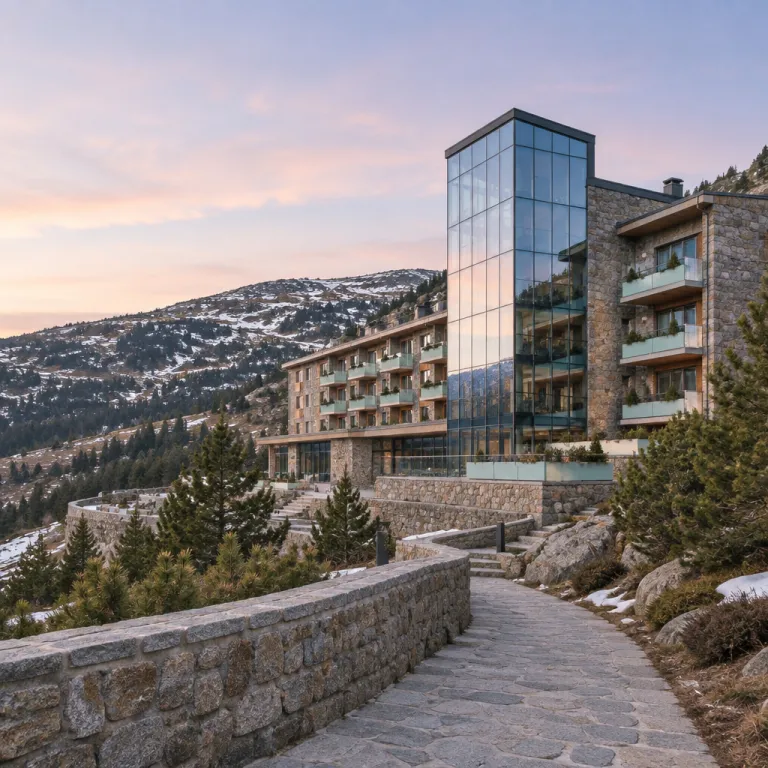
Altitude, light and the quiet power of granite
In the country Andorra, hotel architecture design is never neutral. Every building negotiates between granite weight and glass light, shaping how you feel the mountain before you even unpack. This is where altitude, space and silence become part of the interior rather than just the view outside.
Architects in Andorra work with a demanding palette of stone, timber and glass to create hotels that feel rooted yet contemporary. The most interesting projects use local granite architecture as a structural anchor, then open vast spaces with panoramic views that frame the Pyrenees like a changing artwork. That tension between heavy walls and transparent façades defines the best hotel buildings in this small, vertical country.
Granite architecture in Andorra emerged strongly in the mid twentieth century, and it still underpins many residential building projects and mountain hotels today. As one expert summary puts it, “What is granite architecture? An architectural style using visible granite as a decorative element, prominent in Andorra from the 1930s to 1960s.” When you book a hotel here, you are not just choosing a room; you are choosing how closely you want to sleep beside that stone, that light and that altitude.
Caldea’s glass tower and the new thermal skyline
Nothing captures Andorran hotel architecture design quite like the glass tower of Caldea in Escaldes-Engordany, rising above Andorra la Vella. Opened in 1994 and designed by architect Jean-Michel Ruols, this angular complex is widely described as one of the tallest buildings in Andorra, with a main spire reaching close to 80 metres. Its thermal spa facilities extend across roughly 30,000 square metres, turning the site into a vertical project of light, steam and reflections. A future hotel component, announced with around 40 rooms, is planned to extend that experience upwards, with interiors that bring thermal water features across multiple floors.
Here, architecture and interior design are inseparable from wellness travel. The tower’s crystalline form acts as a contemporary counterpoint to the granite buildings of the valley floor, while panoramic views from each space fold the surrounding mountain slopes into the guest experience. Large windows at altitude are not just aesthetic; they are psychological devices that stretch the interior space and soften the sense of being enclosed.
Inside, the design culture leans toward clean lines, warm materials and carefully calibrated lighting that respects both privacy and spectacle. You move through interiors where glass partitions, reflective pools and quiet reading corners create layered spaces rather than one vast hall. For families planning a stay when the ski lifts pause, the way Caldea’s architecture extends the season pairs well with a broader look at summer hotels with pools and mountain adventure parks.
Granite legends: from Hotel Rosaleda to Andorra Park Hotel
Long before glass towers defined the skyline, granite hotels wrote the first chapter of Andorran hotel architecture design. Hotel Rosaleda in Encamp, attributed to architect Adolf Florensa Ferrer and completed in the mid twentieth century, is frequently cited in local sources as a textbook example of granite architecture used as both structure and ornament. Its façades show how a single material can give a hotel a strong sense of place without sacrificing elegance.
In Andorra la Vella, Andorra Park Hotel translated that granite tradition into a new language of mountain luxury. Terraced volumes step down the slope, creating apartment-style suites and generous interiors that open onto landscaped spaces and long balconies. Here, the building becomes a series of platforms where interior design, gardens and mountain views flow into one another rather than a single monolithic block.
These properties demonstrate how a residential building vocabulary can evolve into high end hotels without losing authenticity. Stone walls, timber beams and deep window reveals keep the Andorran interior palette grounded, while contemporary projects introduce glass, steel and art to refresh the narrative. For travellers tracking how the market is shifting, the performance of these established icons sits in the background of analyses such as recent winter hotel results and their impact on summer demand.
Slope side engineering: Sport Hotel Hermitage and the borda conversions
Move up to Soldeu and the conversation about Andorran hotel architecture design becomes steeper, literally. Sport Hotel Hermitage & Spa is built into the ski slope itself, a project where the building’s lower levels almost disappear into the mountain. Above, stepped terraces and wide glass fronts turn suites and spa spaces into viewing platforms over the Grandvalira domain.
The spa complex, covering several thousand square metres, is integrated into the mountain mass, so guests move through interiors that feel carved from rock rather than placed on top of it. Warm timber, stone and soft textiles balance the cool geometry of pools and treatment rooms, creating spaces where you feel both sheltered and connected to the snow outside. This is interior design as topography, using level changes and framed views to guide your reading of the landscape.
Across the valleys, a parallel movement is transforming traditional bordes, the stone agricultural buildings once used for hay and livestock. Properties like L’Ovella Negra Mountain Lodge in Incles Valley, renovated under the direction of designer Prisca Llagostera according to local press reports, show how careful design proposals can turn these structures into intimate hotels without erasing their past. The result is a series of projects where thick granite walls, low beams and compact interiors become assets, offering a different kind of luxury to the glass and steel of the larger resorts.
Art, sustainability and the quiet details of an Andorran stay
Not every architectural story in Andorra is written in stone and spa steam. In the centre of Andorra la Vella, Grand Plaza Hotel uses contemporary architecture and interior design to create a different kind of theatre, one built around an integrated art collection. Its 90 designer suites function almost like a gallery of interiors, where curated works and tailored lighting turn each space into a private exhibition.
A short walk away, NH Andorra la Vella signals another direction in Andorran hotel architecture design, with eco certification and a focus on sustainable materials. Here, the building envelope, energy systems and interiors are treated as a single project, aligning guest comfort with lower environmental impact. This approach mirrors broader European design culture, where destinations from Andorra to South Tyrol are rethinking how mountain hotels can be both luxurious and responsible.
Across the country Andorra, new apartments in Andorra la Vella and in the ski villages borrow from hotel standards, blurring the line between residential building and hospitality. Architecture studios working on these projects often treat each unit as a small hotel suite, optimising space, light and storage while maintaining privacy. For a deeper sense of how these choices shape year round stays, you can continue reading about shoulder season family trips and hotel choices that respond to changing mountain rhythms.
How to read an Andorran hotel before you book
When you browse hotels in Andorra, the photos tell only part of the story. Look first at how the building sits in its location in Andorra, whether it leans into the slope, crowns a ridge or tucks into Andorra la Vella’s urban fabric. That relationship between building and mountain will shape everything from noise levels to light quality in your room.
Next, pay attention to the balance between granite, timber and glass in both exteriors and interiors. A hotel with thick stone walls and smaller openings will feel cocooned and traditional, ideal if you value quiet reading corners and intimate spaces after skiing. Properties with large glass façades and open plan interiors will feel more contemporary and social, with panoramic views and brighter spaces that suit guests who like to continue the day’s energy into the evening.
Finally, read the language of the interiors as carefully as you would a menu. Does the interior design emphasise natural materials, local art and thoughtful lighting, or does it feel generic and placeless? On a site like myandorrastay.com, where tags for Andorra properties, clear privacy policy information and detailed project descriptions are standard, those clues help you choose not just the best hotel, but the architecture and design story you want to inhabit for a few nights.
FAQ
What makes mountain architecture in Andorra different from other ski destinations?
Mountain architecture in Andorra stands out for its strong use of visible granite combined with modern glass elements. From Hotel Rosaleda to Sport Hotel Hermitage & Spa, many hotels use stone to root the building in the landscape while large windows frame the Pyrenees as part of the interior experience. This blend of traditional materials and contemporary design gives Andorran hotels a distinctive character compared with other Alpine or South Tyrol resorts.
Which hotels best showcase Andorra’s granite architecture heritage?
Hotel Rosaleda in Encamp is one of the clearest examples of classic granite architecture, with façades that highlight the stone as both structure and ornament. Andorra Park Hotel in Andorra la Vella evolves that language into a more expansive luxury format, using terraces and stone walls to connect interiors with gardens and mountain views. Several converted bordes, such as L’Ovella Negra Mountain Lodge, also preserve granite walls while updating interiors for contemporary comfort.
How does architecture influence the feel of a hotel stay in Andorra?
Architecture in Andorra shapes everything from light levels to how you move through a hotel. A slope integrated building like Sport Hotel Hermitage & Spa offers direct ski access and tiered terraces, while a valley hotel with a compact footprint may feel more urban and intimate. The choice between stone heavy, cocooning interiors and glass rich, open spaces will determine whether your stay feels like a retreat, a gallery or a panoramic lookout.
Are there sustainable design trends in Andorran hotels?
Several hotels in Andorra are moving toward more sustainable architecture and interior design, focusing on insulation, energy efficiency and responsible materials. NH Andorra la Vella, for example, holds eco certification and treats the building envelope, systems and interiors as a unified sustainability project. New apartments and hotel renovations increasingly follow similar principles, aligning comfort with lower environmental impact.
Where can I experience both thermal architecture and mountain views in Andorra?
Caldea’s glass tower in Escaldes-Engordany is one of the clearest examples of thermal architecture paired with dramatic panoramic views. The complex combines extensive spa facilities, glass façades and a vertical hotel project that brings thermal water features across multiple levels. Guests can move between warm interiors and wide mountain vistas without leaving the building, making it a strong choice for travellers who value wellness and design equally.