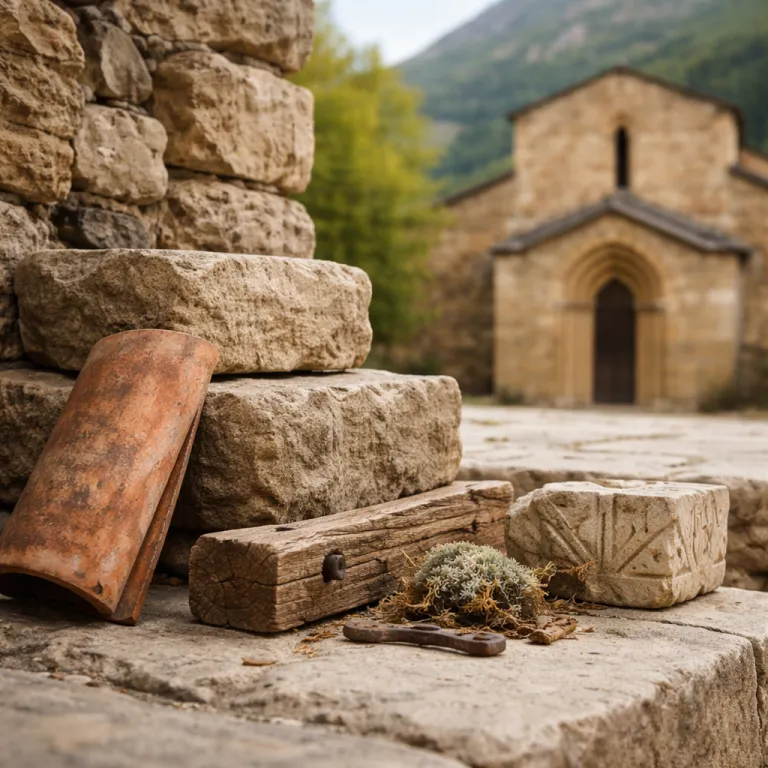
Reading Andorra through stone: why Romanesque belongs in a five star itinerary
Luxury travelers often arrive in Andorra for ski slopes, spas, and shopping. Yet the density of Romanesque churches in Andorra quietly rewrites what this mountain country is really offering. In a territory smaller than many cities, the concentration of medieval church buildings is astonishing and unusually accessible.
Across the seven parishes of Andorra, around thirty Romanesque churches and chapels still stand. According to Visit Andorra’s cultural heritage overview and parish inventories, this gives the principality one of the highest densities of medieval religious architecture per square kilometre in the Pyrenees. That means a historic stone church is never far from your hotel, whether you stay in Ordino, Andorra la Vella, or Sant Julià de Lòria. For a state of roughly 79 000 residents, these sanctuaries from the eleventh and twelfth century reshape any serious cultural itinerary.
The medieval builders who first raised these stone sanctuaries were not chasing aesthetics alone. They were creating a resilient religious and social network for each village and parish, using local stone, thick walls, and rounded arches in a pragmatic Romanesque style. Their work now forms the backbone of Andorra’s cultural heritage and gives today’s luxury guest a rare sense of continuity between past and present.
Many travelers still frame the country as a ski and retail hub. I argue that a five star stay without at least one morning among these Romanesque churches is incomplete. Two hours with the right driver between Sant Joan de Caselles, Santa Coloma, and a smaller parish church changes how you read every valley, every tower, every village square.
Religious architecture will not be every traveler’s anchor, and that is fine. Yet even if you are not a regular church visitor, the best examples of Romanesque art in Andorra are compact, atmospheric, and rarely crowded. They offer a calm counterpoint to the energy of ski pistes, thermal pools, and duty free avenues in Andorra la Vella.
Think of these churches as the country’s original design hotels in stone, long before hospitality marketing existed. Each Andorran Romanesque church was built to withstand harsh winters while remaining human in scale. That balance between protection and intimacy is exactly what discerning guests now seek in a luxury mountain property.
From a practical standpoint, proximity is your ally. With a private driver or a rental car, you can visit three Romanesque churches in a single morning without rushing, especially around the parishes of Ordino, Canillo, and Andorra la Vella. Typical driving times between sites are ten to twenty minutes in normal conditions, which makes cultural immersion compatible with late breakfasts, spa appointments, and unhurried dinners.
For hotel selection, this heritage lens matters. A property in Ordino places you within minutes of Sant Martí de la Cortinada and other village sanctuaries, while a base in Andorra la Vella gives quick access to Santa Coloma and the historic core. Choosing a valley is not just about ski lifts; it is about which bell tower you want as your morning landmark.
Santa Coloma to Sant Joan de Caselles: a Romanesque corridor for luxury guests
The most persuasive argument for integrating Andorra’s Romanesque churches into a premium stay lies in one simple corridor. Between Andorra la Vella, Santa Coloma, and Canillo, you can trace almost three centuries of architectural evolution in less than 30 km. This route aligns naturally with where the best hotels already cluster and can be explored in a single morning.
Begin near the capital, in the parish often written as Andorra la Vella but historically tied to the village of Santa Coloma. The church of Santa Coloma is widely considered the oldest Romanesque church in Andorra, with origins reaching back to the ninth and tenth century. Its circular bell tower, added later, is a textbook example of Lombard style adapted to Pyrenean stone and is highlighted in official heritage descriptions.
Here the data is clear and worth quoting directly for context from local heritage notes: “The Church of Santa Coloma, dating back to the 9th-10th centuries.” That single line encapsulates why Santa Coloma should sit alongside your Michelin reservations and spa bookings, especially when you can reach it in about ten minutes by car from central Andorra la Vella.
From a luxury traveler’s perspective, Santa Coloma works beautifully as a pre lunch excursion. Stay in a central property in Andorra la Vella, enjoy a late breakfast, then reach the church in under fifteen minutes by car, depending on traffic. You step from polished marble lobbies into a compact nave where frescoes and stonework speak of centuries of uninterrupted worship and careful conservation.
Continue up the valley towards Canillo and Sant Joan de Caselles, often shortened locally to Sant Joan. This church stands just above the road, its stone nave and square bell tower framed by steep slopes. Here you see some of the finest surviving Romanesque painting and sculpture in the country, with Christ in Majesty and narrative scenes that reward slow looking and a short guided explanation.
For guests staying at a high end property in Canillo or Soldeu, Sant Joan de Caselles becomes an easy early morning or late afternoon stop. The church was built in the twelfth century, when Andorran Romanesque art reached a confident maturity. Its setting, between river and rock, underlines how the country’s cultural heritage is inseparable from its landscape and from the main road that now links ski areas.
On the same axis, you can fold in a visit to Sant Miquel de Prats or other smaller churches in nearby villages. Each Sant Miquel or Sant Pere you encounter adds another layer to your understanding of how faith, territory, and power intersected in this co principality. For a deeper dive into how these landmarks pair with specific properties, see the dedicated guide to exploring historic landmarks for discerning travelers on our luxury and premium hotel booking website in Andorra.
By structuring one morning around Santa Coloma, Sant Joan, and a secondary parish church, you gain a narrative arc. You move from pre Romanesque roots through mature Romanesque style, then into later centuries where Gothic and Baroque touches appear. The time commitment is modest, yet the shift in how you perceive the country is profound.
Ordino versus Andorra la Vella: two ways to frame a Romanesque stay
Where you sleep in Andorra quietly dictates how you will meet its Romanesque churches. The choice between Ordino and Andorra la Vella is not just about nightlife or shopping; it is a decision between two cultural narratives. I call this the Ordino heritage thesis versus the La Vella retail thesis.
Ordino sits at the northern end of the country, a village that still feels like a lived in museum of Andorran heritage. Here, stone casas with wooden balconies line narrow streets, and the parish church of Sant Corneli i Sant Cebrià anchors the main square. Staying in Ordino places you within a short drive of multiple Romanesque churches, including Sant Martí de la Cortinada and smaller sanctuaries scattered across the valley.
From a luxury perspective, an Ordino base suits travelers who want mornings of cultural immersion and afternoons of hiking or quiet spa time. You wake to the sound of a nearby bell tower, then walk through the village to read centuries of architectural layering in each casa and church façade. The Andorran Romanesque vocabulary becomes part of your daily rhythm, not a separate sightseeing block.
By contrast, Andorra la Vella and its adjacent parish of Escaldes Engordany embody the La Vella retail thesis. Here, international brands, thermal complexes, and high rise hotels dominate the skyline, while the old quarter and the church of Sant Esteve sit slightly apart. Choosing a central hotel gives you immediate access to shopping and dining, with Santa Coloma and other Romanesque churches a short drive away rather than on your doorstep.
Neither framing is inherently better; they simply serve different travel temperaments. If you want the country’s cultural heritage to be the lens through which you view everything else, Ordino and its surrounding villages are compelling. If you prefer to dip into Romanesque churches between spa sessions and restaurant reservations, Andorra la Vella works elegantly.
There is also a geographic nuance that matters for planning. Ordino offers quick access to the northern valleys and to churches like Sant Martí and Sant Pere in rural settings, while Andorra la Vella sits at the crossroads for excursions towards Canillo, Encamp, and Sant Julià de Lòria. Our guide to choosing a valley in Andorra explains how these options translate into actual driving times and daily itineraries.
For the solo explorer persona, I often recommend a split stay. Begin with two nights in Andorra la Vella to visit Santa Coloma, Sant Esteve, and nearby sites, then move to Ordino for a slower, more immersive engagement with village churches and traditional casas. In both locations, the right hotel concierge can arrange private drivers or guided visits that respect opening hours and religious customs.
Designing a two hour Romanesque morning from your luxury hotel
The most effective way to integrate Andorra’s Romanesque churches into a premium itinerary is to design a focused two hour window. Think of it as a curated gallery visit, except the artworks are entire churches and villages. With planning, this short excursion can fit between breakfast and a late lunch without feeling rushed.
Start by mapping which parish you are sleeping in and which churches lie within a 15 km radius. From a hotel in Andorra la Vella, a classic loop might include Santa Coloma, Sant Esteve in the old quarter, and a quick drive towards Encamp to see the ensemble at Les Bons. From Ordino, you might focus on Sant Martí de la Cortinada, a smaller Sant Pere, and a viewpoint over the valley.
Transport is the key variable for maintaining a luxury pace. A private driver or hotel car service allows you to move efficiently between sites while your attention stays on landscape and architecture. In two hours, you can comfortably visit three Romanesque churches, spending fifteen to twenty minutes inside each church and another ten minutes absorbing the village context.
Within each church, look for recurring Romanesque features that define this country’s style. Rounded arches, thick stone walls, and modestly scaled naves are standard, while bell towers vary from the circular Lombard style of Santa Coloma to the square towers of Sant Joan or Sant Miquel. Frescoes, sculpted capitals, and simple wooden altars reveal how art and faith intertwined across centuries.
Do not neglect the spaces between churches. Walking a few minutes through a village, noting how each casa aligns with the church and the surrounding fields, helps you read Andorra as a lived landscape rather than a postcard. The relationship between parish church, bell tower, and communal paths is itself part of the cultural heritage.
For travelers wary of religious spaces, remember that many of these churches function today as both active parishes and heritage sites. Respectful behavior is expected, but you are not intruding on private devotion when you visit during posted hours. Many are open to the public; check local schedules for visiting hours, which often cluster between 10:00 and 13:00 or in late afternoon, and ask your concierge to confirm details the day before.
Seasonality also shapes the experience. In summer, access roads and paths are clear, and combining churches with light hikes or terrace lunches in villages like Ordino or Sant Julià de Lòria works beautifully. In winter, snow adds drama to each tower and roofline, but you will want a driver familiar with mountain conditions and local parking rules.
Ultimately, that two hour Romanesque morning is less about ticking off churches and more about recalibrating your sense of the country. After standing inside a twelfth century Sant Pere or Sant Martí, the glass and steel of your luxury hotel reads differently. You are no longer just in a tax efficient ski enclave; you are in a place where stone, faith, and power have been negotiating space for centuries.
Key figures for Andorra’s Romanesque heritage
- Around 30 Romanesque churches and chapels are preserved across Andorra’s seven parishes, according to Visit Andorra and parish heritage inventories, giving the country one of the highest densities of medieval religious architecture per square kilometre in the Pyrenees.
- The main phase of Romanesque construction in Andorra spans the eleventh and twelfth centuries, following earlier pre Romanesque structures from the ninth century and preceding later Gothic additions documented in local archives and conservation reports.
- Santa Coloma, identified in official descriptions as “The Church of Santa Coloma, dating back to the 9th-10th centuries”, stands as one of the oldest surviving churches in the country and anchors the heritage offer near Andorra la Vella.
- Typical architectural features of Andorran Romanesque churches include rounded arches, thick stone walls, and simple façades, which were designed to withstand harsh mountain climates while remaining easy to maintain by small communities.
- Many of these churches were built by local communities working with religious authorities and skilled artisans, using local stone and basic masonry tools, which reinforces their status as shared cultural heritage rather than elite monuments.