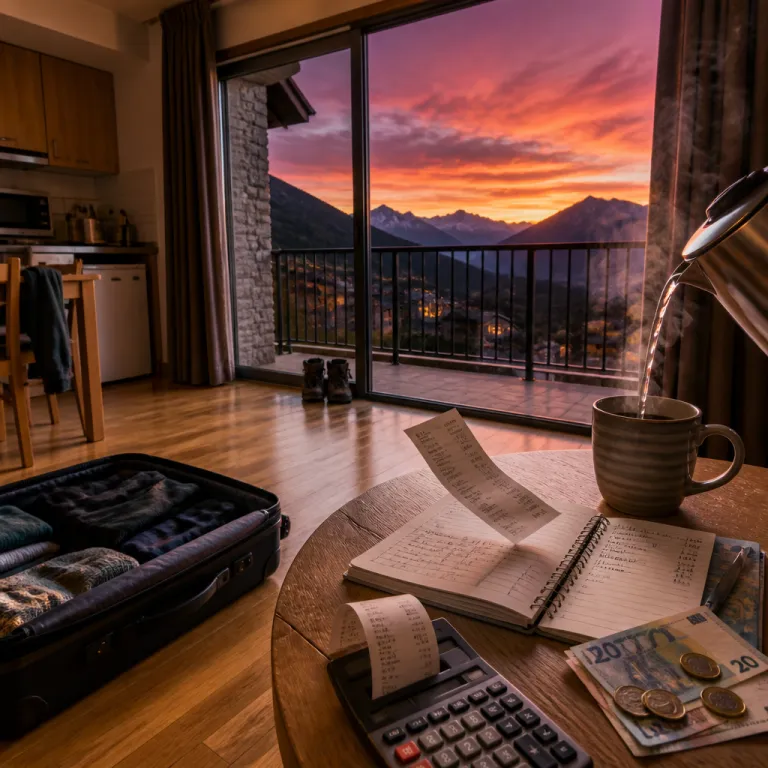
Andorra digital nomad extended stay in a ski resort apart-hotel
Working from a mountain apart-hotel in Andorra feels surprisingly practical. For a digital nomad used to big city rhythms, the entire country compresses into a compact, twenty minute radius that still delivers serious ski terrain and polished hospitality. This makes an Andorra digital nomad extended stay uniquely efficient for executives who want real work days, not just laptop selfies by the fire.
The country has leaned into the digital economy with fibre connections that routinely exceed 400 Mbps in urban areas, so remote workers can join board meetings while snow settles outside. Public speed tests and telecom reports from providers such as Andorra Telecom consistently place Andorra’s average fixed broadband performance among the stronger networks in Europe, which reassures any applicant who fears rural dead zones. For location independent professionals who bill by the hour, that reliability matters more than any spa menu or ski pass.
Most nomads andorra who come for a month choose apart-hotels in Andorra la Vella or the ski villages above, balancing residence style comfort with hotel level service. These properties suit a digital nomad who needs a defined work zone, a proper kitchen and the option of housekeeping on busy days. When you frame your stay as both residence and office, the premium you pay over a long term rental becomes part of your work expense rather than a holiday indulgence, especially in branded serviced apartments or extended stay suites.
Visa, residence permit and what the new law really offers
The headline change for any nomad andorra is the dedicated digital nomad visa introduced by Law 42/2022 on the digital economy, entrepreneurship and innovation. This remote work residence route is designed to grant a multi year permit with a minimum stay of ninety days per year, which is a softer commitment than traditional residence permits that demanded deeper roots and higher financial thresholds. Earlier passive residence categories often required a significant deposit with the Andorran Financial Authority (AFA), so the newer framework feels more accessible to skilled professionals rather than only wealth managers.
Under the law, an applicant must show proof that their work is genuinely remote and not tied to the local economy entrepreneurship ecosystem. The ministry of economy treats digital nomads as contributors to the digital economy and tourism rather than as traditional employees, so the residence permit framework reflects that hybrid status. Catalan at A1 level is reported as a requirement at the first renewal in official guidance, which is manageable over two years and signals that resident status comes with a cultural, not just fiscal, commitment.
For an andorra digital nomad extended stay of one month, you sit in a grey zone between tourist and future resident. You can use that time to test whether the country, its tax regime and its compact geography suit your lifestyle before applying for a full residence permit. Families considering a longer move often combine this trial month with a stay in a high service property that already understands extended guests, choosing brands that explicitly cater to remote workers and long stay visitors and checking current rules with Andorran immigration or specialist advisers.
What a month really costs in Andorra la Vella and the ski valleys
Cost is where the romance of an Andorra digital nomad extended stay meets the spreadsheet. Online research, local surveys and real time budgeting apps all point to a baseline of around EUR 1,100 for a one bedroom apartment, a figure that aligns with averages reported by well known cost of living databases and rental portals that track advertised prices such as Idealista or Fotocasa. When you translate that into an apart-hotel with hotel services in Andorra la Vella or a ski resort, you should expect a premium of thirty to fifty percent for flexible terms and daily housekeeping.
Groceries for a single digital nomad usually land near EUR 330 per month, while eating out in the ski resorts can double that if every lunch becomes a mountain restaurant tasting menu. International tourism statistics suggest that short stay visitors often spend well over EUR 150 per day once accommodation, food and ski passes are included, but extended stays change the economy because you cook more, ski less and treat the country as a temporary residence rather than a theme park. For remote workers, the real work related expenses are connectivity, a quiet workspace and perhaps a day pass to a spa when deadlines collide with altitude headaches.
Transport within the country is modest because distances are short and public buses link Andorra la Vella with the main ski areas in under forty minutes. Many digital nomads simply walk within the capital, using the month to understand how the city, the valleys and the peaks fit together before committing to longer residence permits. If you time your andorra digital nomad extended stay for the shoulder season, local guides and seasonal analyses that explain what changes when the crowds leave and the peaks turn gold will help you align budget with atmosphere.
Tax, income and the reality of resident status for remote workers
Andorra’s reputation as a low tax country is both accurate and often misunderstood. For a digital nomad on a one month stay, your income tax obligations usually remain anchored in your home jurisdiction, because you are far from the days per year threshold that would typically trigger resident status. The andorra digital nomad extended stay is therefore more of a scouting mission, allowing you to test lifestyle, connectivity and costs before engaging tax advisers.
When digital nomads transition from tourist to resident, the law expects clear proof of income, clean documents and a transparent work structure that fits the remote workers category. The ministry of economy views this cohort as part of a broader economy entrepreneurship and entrepreneurship innovation strategy, where high value professionals base themselves in the mountains while billing clients elsewhere. That is why the digital nomad visa focuses on remote work and excludes applicants who want to compete directly with local labour in Andorra la Vella or the ski resorts.
Health insurance and medical insurance are non negotiable for any residence permit, and serious applicants should treat them as core infrastructure rather than a bureaucratic nuisance. A comprehensive policy that covers emergency care, evacuation and routine treatment will protect both you and the national health system, reinforcing trust between digital nomads and the host country. Over time, as more nomads andorra secure resident status, their spending on accommodation, services and leisure will feed into the local economy and help justify the policy shift towards the digital economy.
Choosing the right apart-hotel for a productive ski season stay
Not all mountain properties are equal when your ski trip doubles as a boardroom. For an andorra digital nomad extended stay, prioritise apart-hotels that offer separate sleeping and work areas, reliable digital infrastructure and soundproofing that can handle both après ski and quarterly earnings calls. In practice, that often means choosing properties in Andorra la Vella for Monday to Thursday work blocks and shifting to ski resort bases for long weekends.
High end apart-hotels in the capital give you quick access to government offices, banks and the ministry of economy if you are exploring a future nomad visa or residence permit. Well equipped business hotels and serviced apartments in the city illustrate how top tier properties are adapting to remote workers with quiet lounges, strong Wi Fi and discreet service. In the ski valleys, look for residences that offer ski in access, heated gear rooms and late checkout policies, so your work days and powder days can coexist without friction.
Whatever your base, confirm that the property understands the specific needs of digital nomads and remote workers rather than just long weekend tourists. Ask about dedicated desks, extra monitors, printing facilities and whether the internet bandwidth is guaranteed per room or shared across the building. A well chosen apart-hotel turns your andorra digital nomad extended stay into a controlled experiment in mountain living, where every detail from laundry cycles to meeting schedules has been quietly engineered for performance.
FAQ
How much should a digital nomad budget for one month in Andorra ?
A realistic monthly budget for a single digital nomad in Andorra starts around EUR 1,800 to EUR 2,400, excluding flights. This assumes roughly EUR 1,100 for a one bedroom apartment or basic apart-hotel, about EUR 330 for groceries and the rest for transport, cafés, co working or spa days. Estimates from international cost of living databases and expat surveys fall in a similar range, with higher figures for those who favour premium dining or frequent ski passes.
Is the Andorra digital nomad visa necessary for a one month stay ?
For a one month andorra digital nomad extended stay, most visitors enter as tourists under standard Schengen style rules, even though Andorra is not formally in the Schengen area. The dedicated digital nomad visa becomes relevant when you plan to stay at least ninety days per year and want a multi year residence permit with clearer tax and residence status. Many remote workers use the first month to decide whether applying as an applicant for the nomad visa makes sense.
What documents and proof of income are required for the digital nomad visa ?
Applicants for the digital nomad visa must provide documents that prove stable remote work, sufficient income and clean legal records. Authorities typically ask for contracts with foreign clients, recent bank statements, proof of health insurance or medical insurance and evidence that your activity fits the digital economy rather than local employment. Exact thresholds and formats can change, so serious digital nomads should verify requirements directly with Andorran authorities or specialised advisers before applying.
Is Andorra la Vella or a ski resort better for an extended stay ?
Andorra la Vella suits digital nomads who prioritise business meetings, government offices and urban services within walking distance. Ski resorts work better for those who want ski in access, quieter evenings and direct contact with the mountains between work sessions. Many remote workers split a month between the capital and the valleys to test both lifestyles before committing to longer residence permits.
How does Andorra’s tax system affect digital nomads and remote workers ?
During a short andorra digital nomad extended stay of one month, most digital nomads remain tax resident in their home country because they do not meet the days per year threshold in Andorra. If they later obtain resident status through a residence permit, their global income tax situation becomes more complex and usually requires professional advice. The country’s relatively low income tax rates can be attractive, but only when aligned correctly with international tax rules and personal circumstances.